Our House Hangout Goofball Q and A
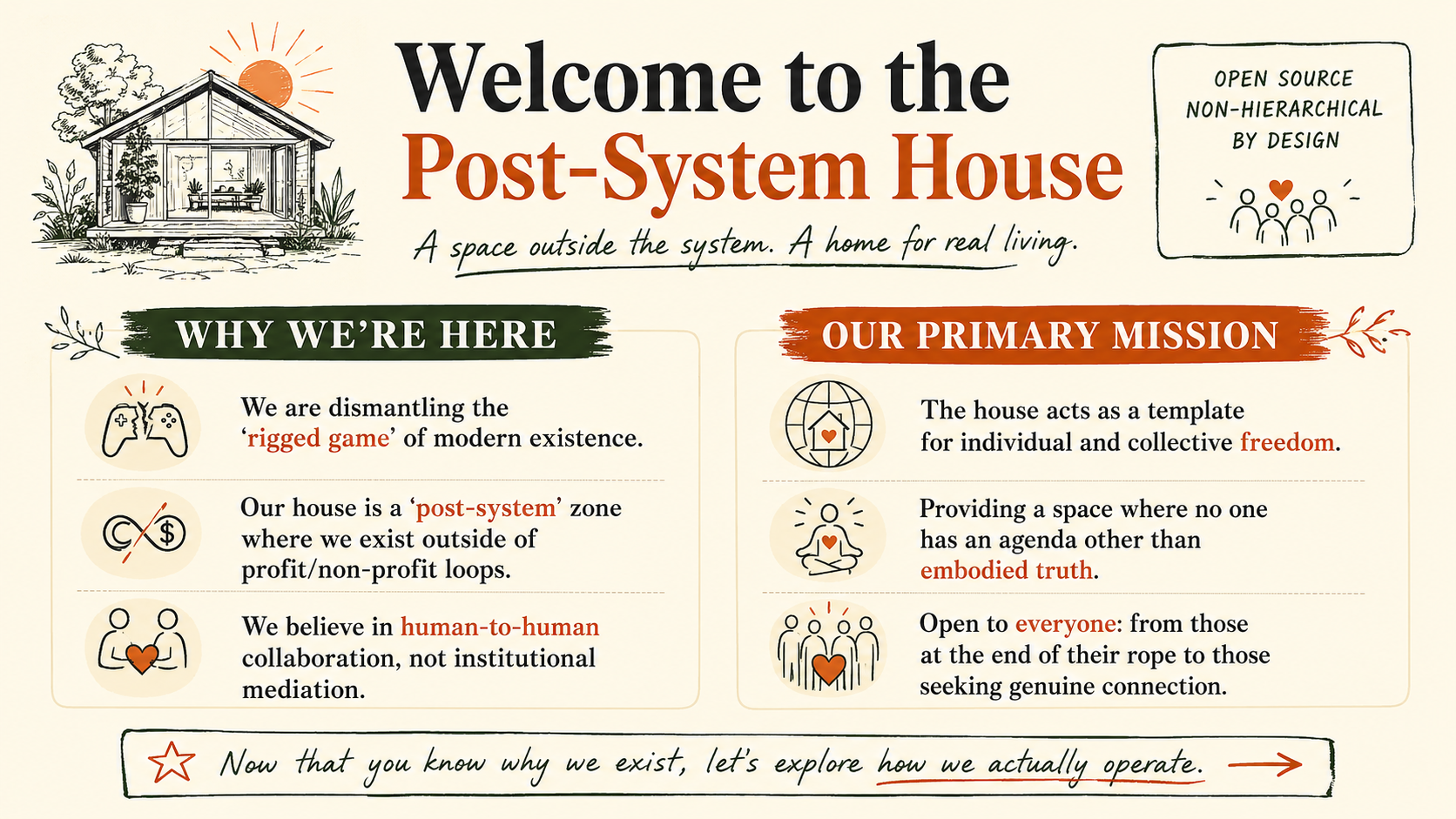
This video, Our House Hangout Goofball Q and A presents a lively and heartfelt discussion between two main hosts, Anthony Ford and J'ana, about their radical project: a “postsystem house” that acts as a communal space outside the traditional frameworks of state control, profit motives, and nonprofit bureaucracy.
The goal? To create a free, shared environment where individuals can stop playing a rigged societal game, co-exist with mutual care, and rebuild community from the ground up.
Anthony is a self-described “professional nuisance” specializing in relocating people from difficult situations, while J'ana was a clinical psychologist who has spent decades working with individuals, now seeking systemic change that addresses root causes rather than symptoms.
The house is open to everyone and encourages a culture that rejects paperwork, capitalism’s exploitations, and hierarchical competition, emphasizing collective freedom and sharing as natural human defaults.
They discuss the failures of existing systems—political, social, economic—and stress the importance of stepping off the capitalist wheel instead of trying to fix it from within.
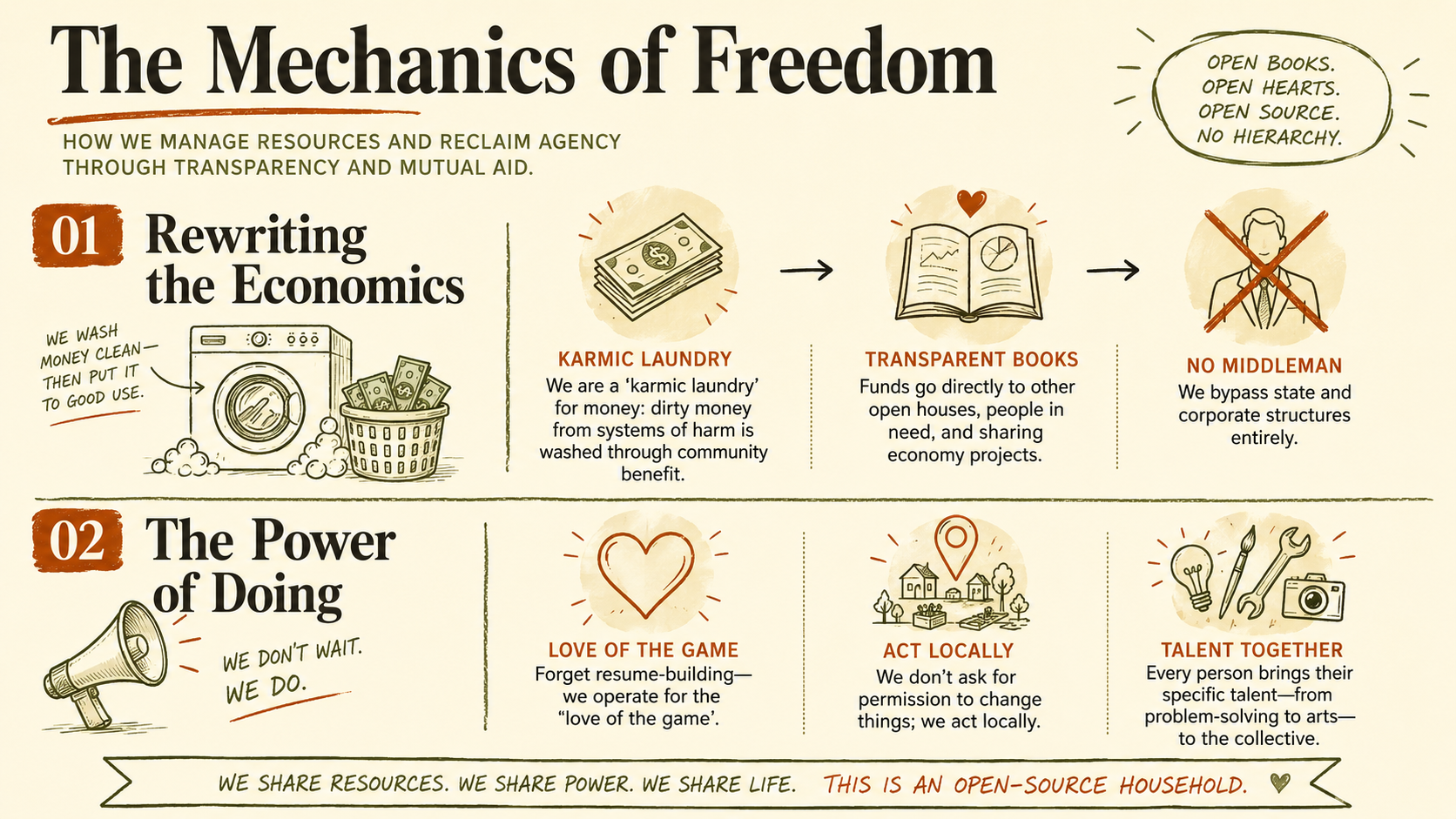
The conversation touches on ideas like monies being “laundered” into true community causes, the collapse of civilization’s faith in institutions, and the need for new forms of mutual aid without middlemen or agendas.
Throughout, they candidly address difficult societal topics such as wealth inequality, the moral cost of investments, capitalism’s rigging, and how humanity can heal and unite through shared values rather than division and competition.
Their model involves transparency, accountability through community involvement, and an ethos of participation for love rather than profit.
They also incorporate humor and references to pop culture, such as My Hero Academia, to illustrate concepts of systemic decay and renewal through love and collective effort.
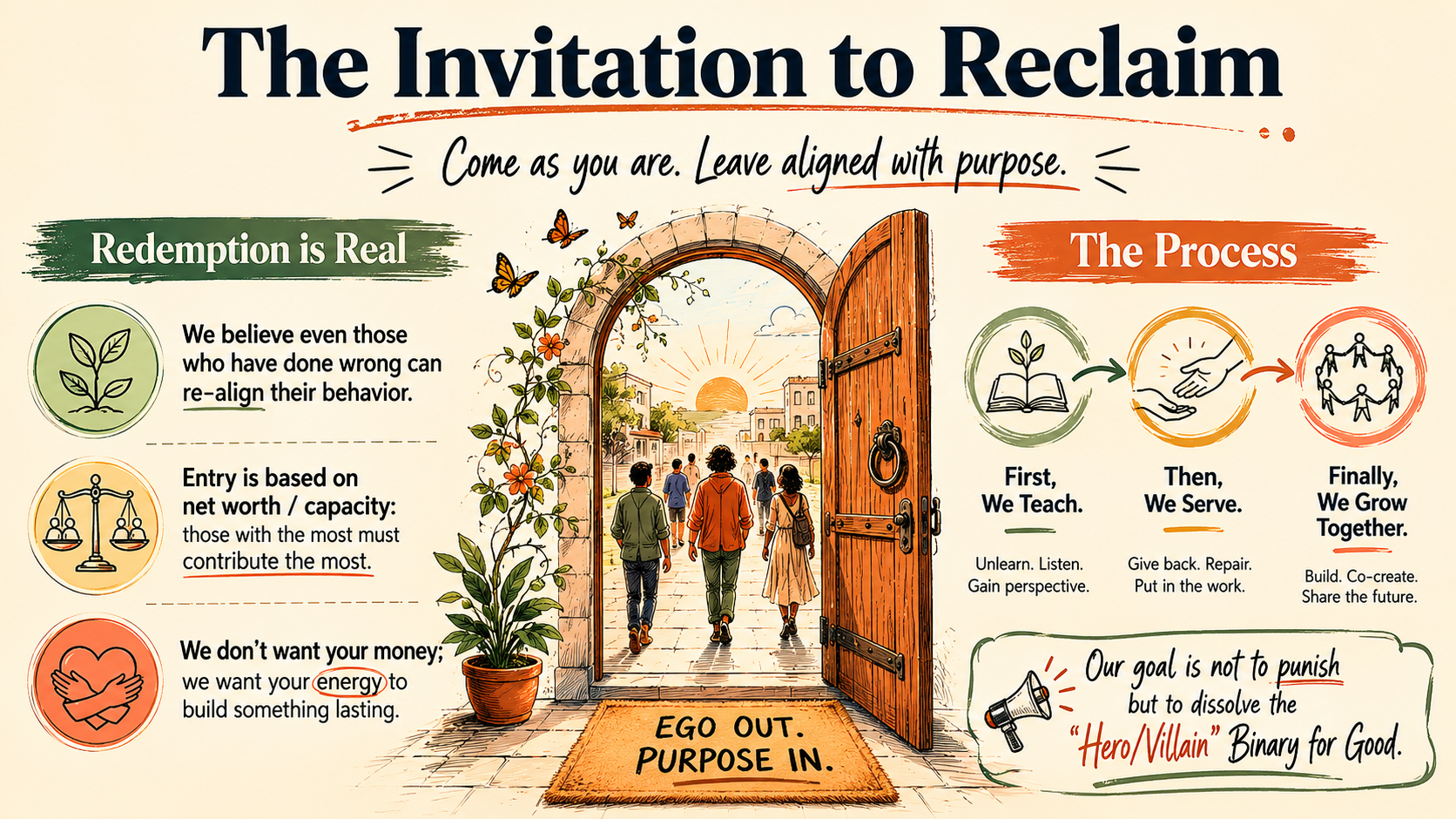
Ultimately, the video paints a hopeful vision of a post-system society where people care for each other authentically, reparations and redemption are possible, and everyone is invited to join and participate in a new kind of family and home.
Highlights from Our House Hangout Goofballs Q and A
Our House Hangout Goofball Q and A
- [04:00] 🤝 J'ana describes the “postsystem house” as a space beyond profits, nonprofits, and bureaucratic time, focusing on freedom and community.
- [06:50] 💰 Sharp critique of capitalism’s exploitation—workers never see full profits—highlighting systemic inequalities.
- [09:40] 🔄 Promotion of stepping away from capitalist competition into natural mutual aid economies without money or payment.
- [24:00] 😈 Anthony’s “annoyatrons” as inventive nonviolent tools to disrupt oppressive powers and maintain community boundaries.
- [41:20] ⛪ Strong critique of churches and nonprofits hoarding wealth rather than genuinely helping vulnerable people.
- [01:13:00] 📺 Use of My Hero Academia to illustrate dynamics of systemic decay, villainy, leadership, and transformation.
[01:00] 🏡 Anthony introduces “smog,” a grassroots initiative relocating people from hostile housing for free, funded by donations.
Extended Summary of
Our House Hangout Goofball Q and A
Our House Hangout Goofball Q and A
Anthony and J'ana's project is a bold experiment in re-imagining social relations by creating a physical and ideological space where the dominant system does not apply.
Their rejection of paperwork and traditional bureaucracy is not mere anarchism; it’s a practical strategy to bypass the gatekeepers who enforce hierarchies and commodification.
By positioning their house as a “postsystem” entity, they invite people to experiment with living outside economy-driven temporal frameworks, building community based on mutual respect, care, and free association.
Their critique of capitalism is incisive yet grounded. They confront the uncomfortable reality that wages and employment contracts strip individuals of the majority of value they generate, benefiting only owners and creditors.
This frankness resonates deeply in a time where gig economies and precarious employment highlight systemic inequities.
Their call to “step off the wheel” is a powerful invitation to abandon the pursuit of endless productivity and consumption, replacing it with communal sharing and collaborative living—mimicking early human societies and natural ecosystems where cooperation rather than competition dominated.
The idea that sharing and mutual aid are our natural default behaviors disrupts the capitalist narratives that frame individualism and competition as inherent to human nature.
By reinstating sharing as normal and payments/money as artificial impositions, they also redefine success and contribution.
This could encourage communities to re-establish social safety nets that function without bureaucratic interference or profit motives.
Anthony’s creative resistance tactics, including “annoyatrons,” highlight the value of inventive, low-impact tools in activism.
Such tools create discomfort for oppressive actors without physical harm, representing a nonviolent yet impactful form of protest and boundary enforcement within communities.
The critiques of religious and nonprofit institutions resonate in their emphasis on accountability and transparency.
The traditional church and nonprofit models historically act as intermediaries that often retain wealth rather than redistribute it effectively.
By contrast, their projects aim for direct peer-to-peer support and funding, circumventing middlemen and increasing trust and communal responsibility.
This could serve as a blueprint for future decentralized community aid systems.
The analogy to My Hero Academia creatively frames systemic transformation as a battle of decay and renewal, power dynamics, and leadership roles.
It bridges abstract sociopolitical ideas with popular culture, making complex concepts more relatable.
The idea that transformative leadership can emerge even from brokenness and dysfunction aligns with their inclusive approach to redemption and healing.
In sum, this discussion invites viewers to challenge the foundational myths of modern society—ownership, competition, profit—and embrace a radically different model based on mutual aid, transparency, collective care, and playfulness.
Their project represents both a sanctuary and a prototype for a post-capitalist, post-system future.