Ep 076 Healing Family Cycles
The conversation in Ep 076 Healing Family Cycles centers around conscious parenting, internal family systems (IFS), healing family cycles, and the profound transformation possible when parents heal themselves to better support their children.
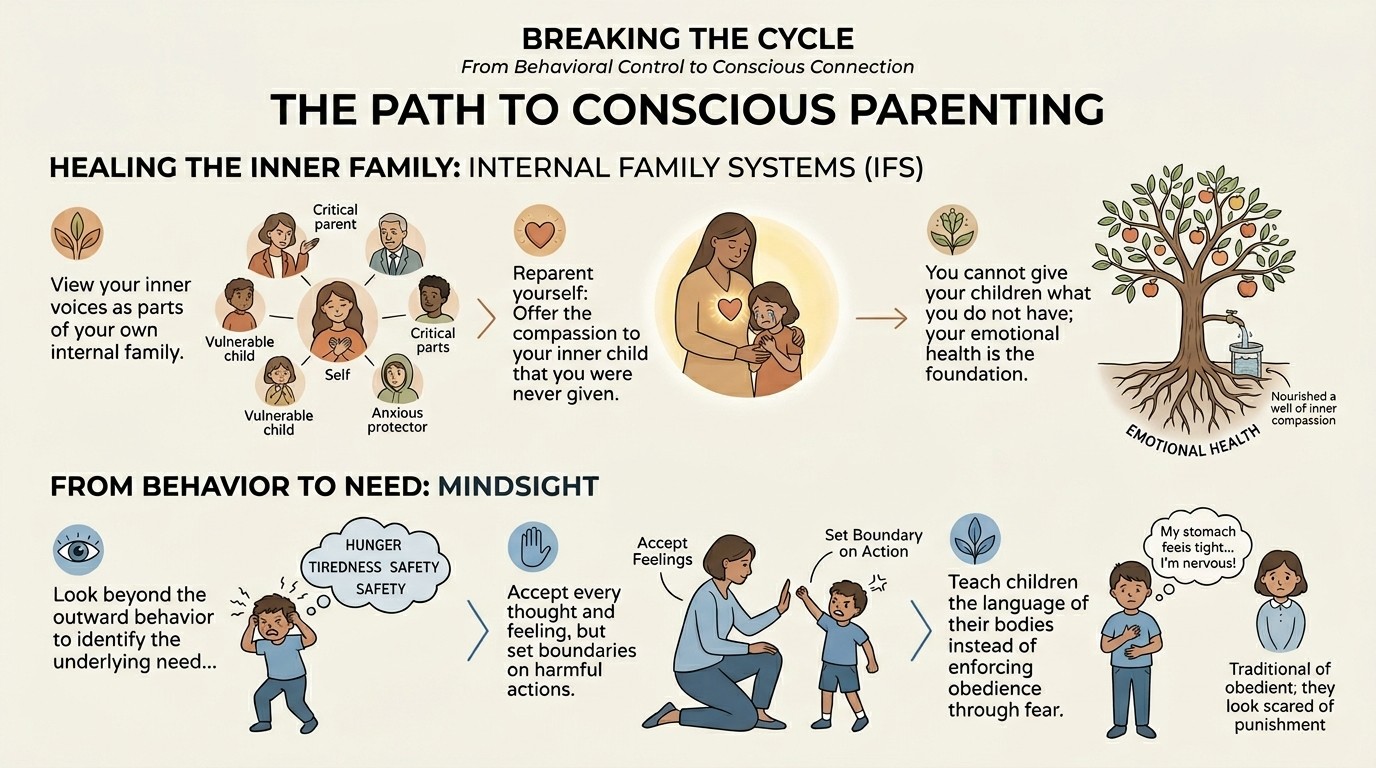
Ep 076 — Healing Family Cycles
A deeper exploration of conscious parenting, inner healing, and emotional foundation
Follow this link to J'ana's Substack page for Ep 076 Healing Family CyclesLucy, a mother of one young daughter and several stepdaughters, shares her journey from feeling overwhelmed and near suicidal postpartum to discovering conscious and respectful parenting through Janet Lansbury’s teachings.
This approach views children as whole, complex human beings deserving of respect, rather than subjects to be controlled through behaviorism and punishment.
Lucy explains how parenting consciously helped her heal her own inner child and past wounds, which in turn improved her relationship with her daughter and her family of origin.
The discussion further explores IFS, a therapeutic model recognizing the multiplicity of the mind’s parts, each with its own voice and perspective formed by past experiences.
Healing these internal parts helps one respond with compassion and self-understanding, crucial for conscious parenting.
J'ana and Lucy emphasize the importance of allowing all feelings and thoughts — even difficult ones like hatred or anger — to be expressed safely without judgment, while guiding behavior with loving boundaries.
They address the societal and systemic challenges parents face, highlighting the clash between raising children outside the traditional "matrix" of behaviorism and the demands of the wider world, which often enforces outdated models of control and fear-based obedience.
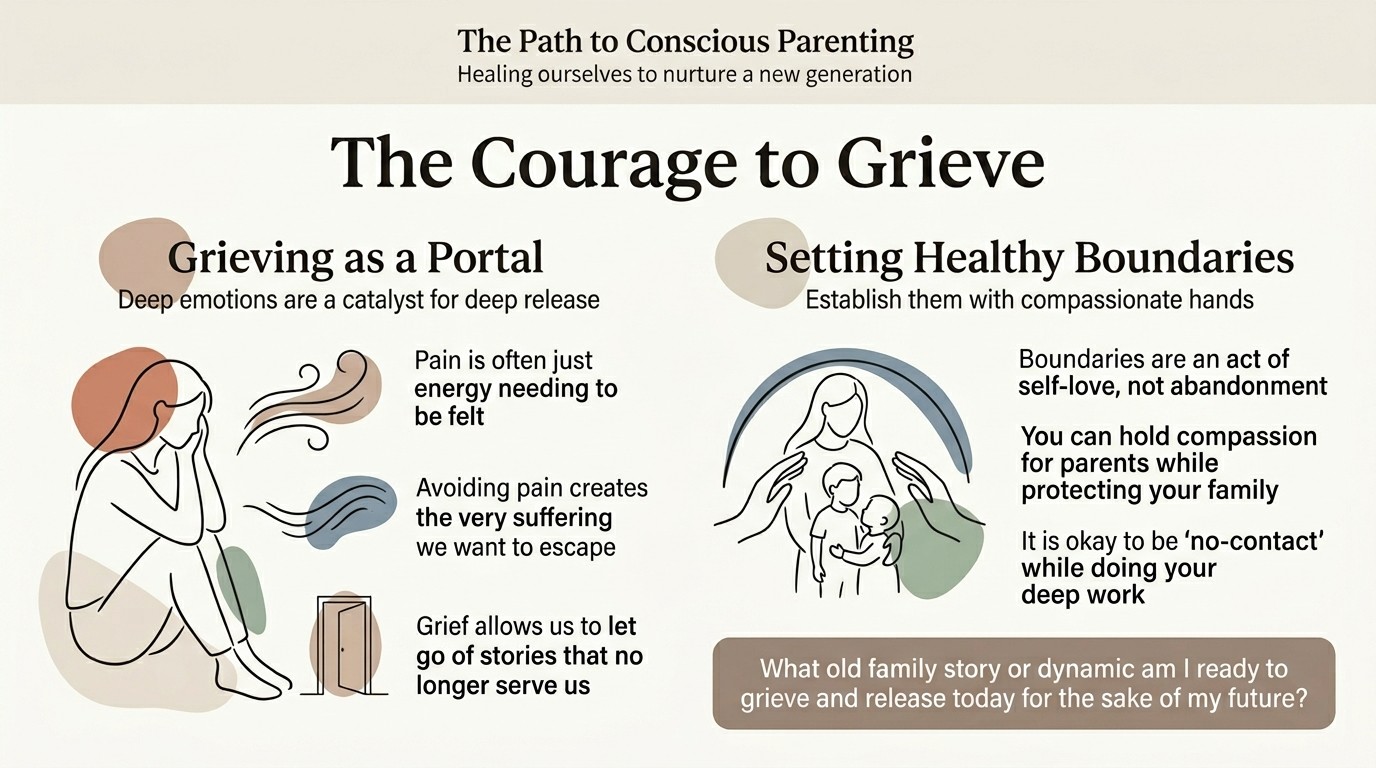
They discuss the pain many parents carry from their own childhoods, the shame culture rooted in religion and behaviorism, and the necessity of grieving past wounds to break generational cycles.
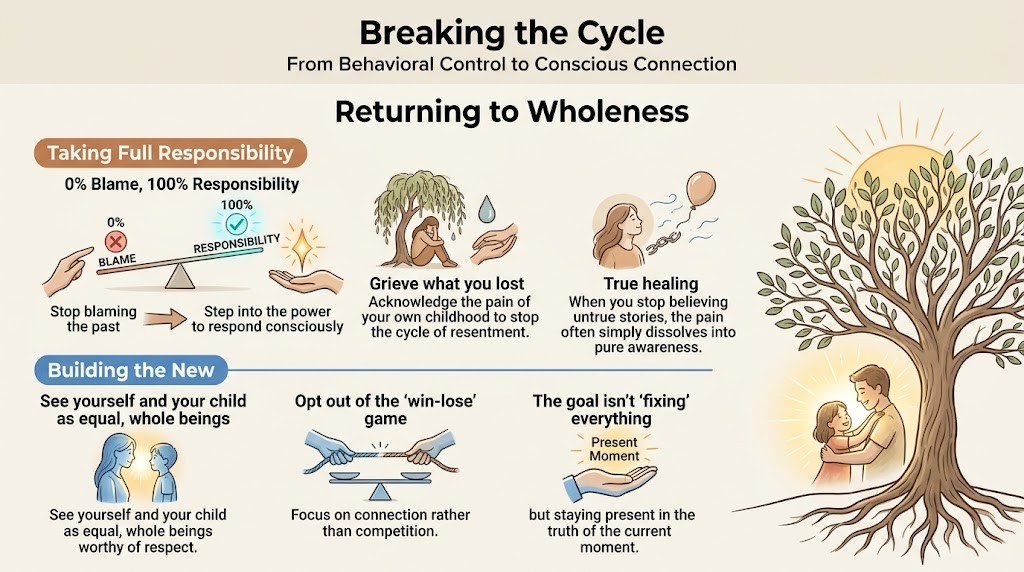
The conversation in Ep 076 Healing Family Cycles also touches on the psychic connection between parents and children, the need for self-compassion in parenting, and the challenges in healing co-dependent or codependent dynamics within families.
J'ana and Lucy advocate for a new paradigm centered on presence, respect, and empowerment — a shift from power-over, fear-based systems to power-with, loving relationships that honor the inner child and the body’s wisdom.
Ultimately, the dialogue is a call to parents and caregivers to embrace healing as a lifelong process, to show up authentically, and to foster environments where children and adults alike can thrive emotionally and spiritually.
The healing of family cycles is framed as a collective effort that reverberates through ancestors and future generations.
### Highlights
- 🌱 Conscious parenting sees children as whole, deserving respect beyond behavioral control.
- 🧠 Internal Family Systems (IFS) therapy helps recognize and heal the multiple parts within ourselves.
- 💔 Healing your inner child is essential for breaking harmful family cycles and parenting consciously.
- 🛑 All feelings are acceptable; boundaries guide behavior with compassion, not punishment.
- 🌍 We are part of one large family; healing individual family cycles contributes to collective healing.
- 🔄 Parents’ unresolved wounds often mirror in their children’s challenges; healing is intergenerational.
- 💡 Shifting from fear-based control to empowerment and presence is crucial for a new parenting paradigm.
Ep 076 Healing Family Cycles -
Healing the Internal Family
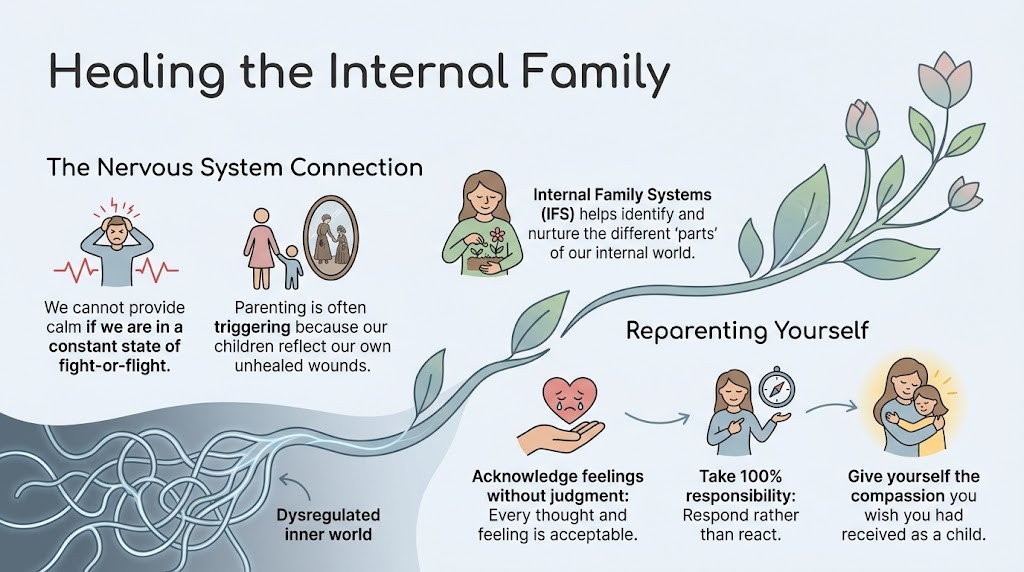
### Key Insights from Ep 076 Healing Family Cycles
-
🌟 **Conscious Parenting as a Radical Shift**: Conscious parenting
contrasts deeply with traditional behaviorist models that rely on fear,
punishment, and control. Instead, it invites parents to see their
children as autonomous beings with emotions and needs that deserve
understanding and respect. This shift requires unlearning ingrained
cultural conditioning and embracing a more empathetic, patient approach.
The impact is profound, transforming not just parent-child
relationships but also the parent’s self-awareness and healing.
- 🧩 **Internal Family Systems (IFS) Illuminates Inner Complexity**: IFS reveals that we are composed of multiple inner "parts" or subpersonalities, each carrying different fears, hopes, and wounds. Parenting challenges often trigger these parts, leading to reactive behaviors. Understanding and nurturing these internal parts allows parents to respond with compassion rather than reactivity, fostering emotional regulation and healing. This model also helps parents recognize how unresolved trauma or limiting beliefs from their past influence their parenting styles.
- 💔 **The Importance of Healing One’s Own Inner Child**: The conversation underscores that parents cannot give what they do not possess emotionally. Healing one’s own childhood wounds — often hidden beneath layers of shame, fear, and denial — is crucial for breaking toxic cycles of parenting. This healing involves allowing oneself to feel pain, grief, and anger without judgment, which leads to self-compassion and the ability to model healthy emotional expression for children.
- 🛑 **Balancing Acceptance of Feelings with Behavioral Boundaries**: A key teaching is that all feelings are valid and acceptable — even those that society labels as negative or dangerous, such as anger or hatred. However, not all behaviors stemming from those feelings are acceptable, especially if they harm others. Conscious parenting involves holding this balance, allowing feelings to be expressed and witnessed while setting compassionate but firm limits on actions. This approach helps children learn emotional regulation without internalizing shame or fear.
Ep 076 Healing Family Cycles - Breaking Family Patterns
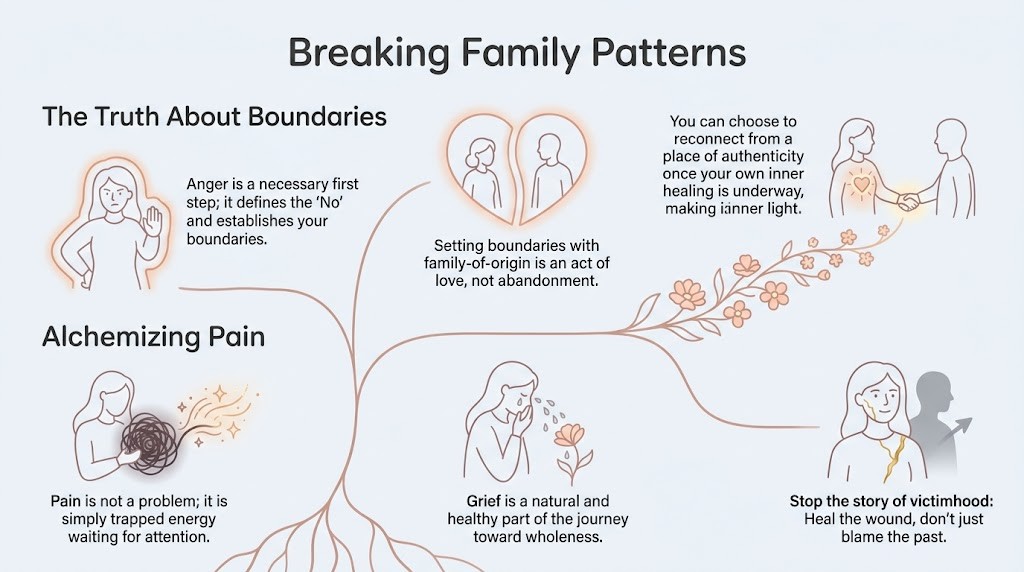
- 🌍 **Healing Family Systems is Collective and Intergenerational**: The healing work is not just personal but extends to the family lineage and collective humanity. Every healed trauma or limiting belief affects the family system energetically and emotionally, creating ripples that impact ancestors and descendants alike. Recognizing this interconnectedness encourages parents to view their healing journey as part of a larger, transformative process that contributes to societal healing.
- 🔄 **The Challenge of Parenting in a Behaviorist Society**: Parents who embrace conscious parenting often face societal pressures that maintain the old paradigm of behaviorism, competition, and fear-based control. This creates a "Sophie's choice" — either conform to societal norms that may harm the child’s natural development or risk marginalization by opting out (e.g., homeschooling, alternative schooling). This tension highlights the need for systemic reform to support healthier parenting and educational models.
- 💡 **Authenticity, Presence, and Self-Responsibility as Foundations for Change**: The dialogue stresses that healing and conscious parenting require parents to take full responsibility for their emotional health without blame or shame toward themselves or their parents. This involves cultivating self-compassion, setting boundaries, and embracing authenticity. Such presence fosters environments where children feel seen, safe, and empowered. This approach contrasts starkly with traditional parenting rooted in control and external validation, offering a hopeful path forward for families and society.
### Additional Notable Themes
- The role of shame rooted in religious and cultural conditioning as a barrier to emotional honesty and healing.
- The psychic connection between parent and child, where children mirror and bring to light unresolved parental wounds.
- The societal dehumanization of both children and adults through conditioning and behavioral control systems.
- The importance of grief and allowing oneself to fully experience sadness as a path toward healing.
-
The potential for a new world paradigm where women and children are
central, and relationships are built on mutual empowerment rather than
domination.
- The vision of raising children “outside the matrix,” fostering presence, bodily awareness, and connection to nature.
- Practical parenting insights such as “time-ins” instead of timeouts, validating feelings, and providing choices to children.
This extensive dialogue offers a compassionate, nuanced exploration of conscious parenting and healing that embraces complexity, acknowledges pain, and inspires transformative hope.