NHRH Chapter 1 An Introduction - Ep 006
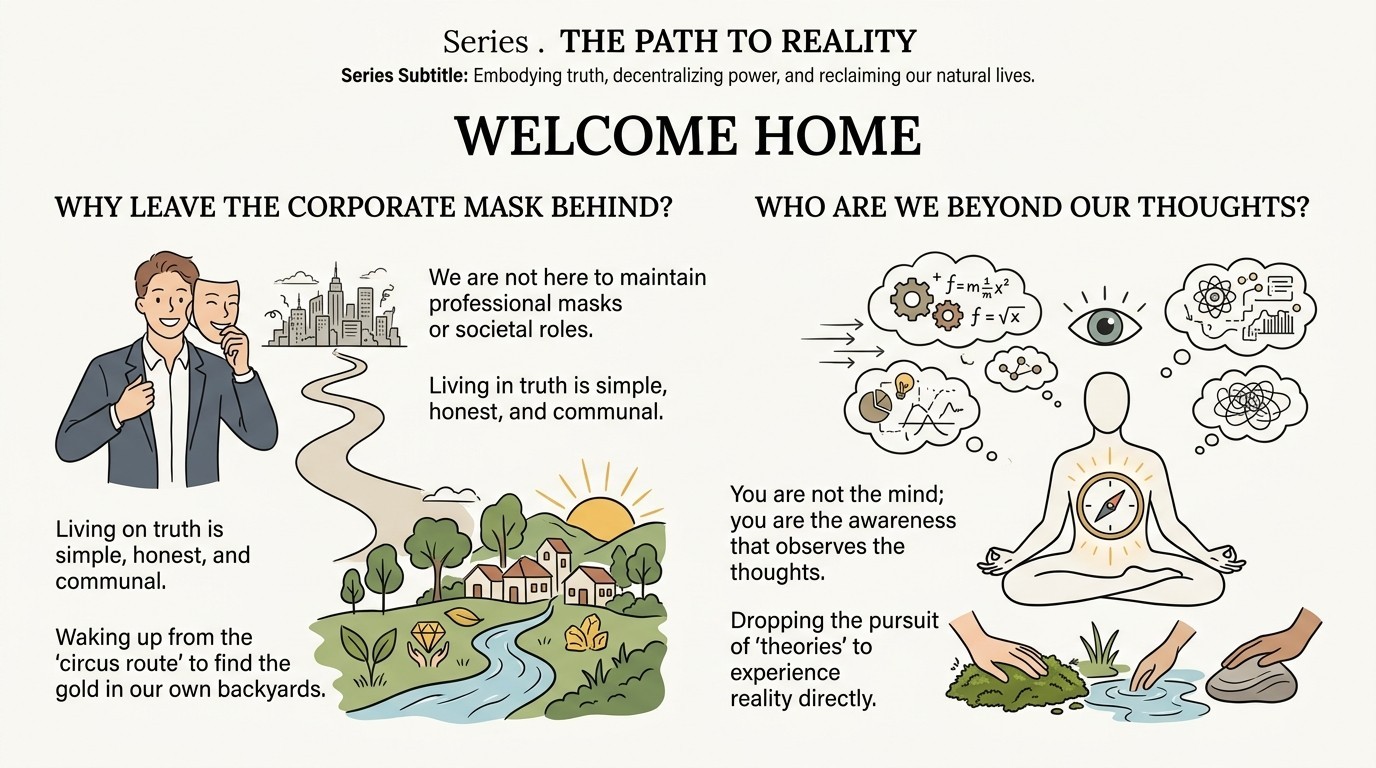
The video transcript of NHRH Chapter 1 An Introduction presents an intimate and profound conversation from J'ana, who intertwines personal story, psychological insights, spiritual awakening, and social commentary.
J'ana shares their lifelong quest for truth, beginning with a heartfelt childhood memory of praying for a dog, symbolizing a deep trust in the universe’s magic and natural law.
They reflect on their academic journey through psychology and spirituality, revealing a growing disillusionment with traditional therapy and spiritual teachings that often disconnect from lived reality, the body, and natural law.
Central to J'ana's message is the critique of the dominant cultural narratives rooted in separation, specialness, and authority—ideas that fragment our sense of self and keep us trapped in stories of limitation, fear, and disembodiment.
J'ana champions embodiment as the path to healing, emphasizing that true awakening happens not just through intellectual understanding or spiritual insight but through visceral, bodily experience.
They highlight the importance of healing trauma stored in the body and advocate for practices that integrate awareness with physical healing, moving beyond the mind’s stories.
J'ana also addresses systemic issues, pointing out the failures of capitalism, patriarchy, and colonization, which perpetuate separation and suffering on a collective scale.
They envision a new world based on natural law where communities share resources freely, reject hierarchical authority, and honor feminine leadership and protection.
This vision includes digital and physical commons, where knowledge, tools, and support are accessible to all, fostering authentic connection and fulfillment.
Throughout, J'ana maintains a tone of radical honesty, vulnerability, and inclusivity, frequently referring to her audience as friends.
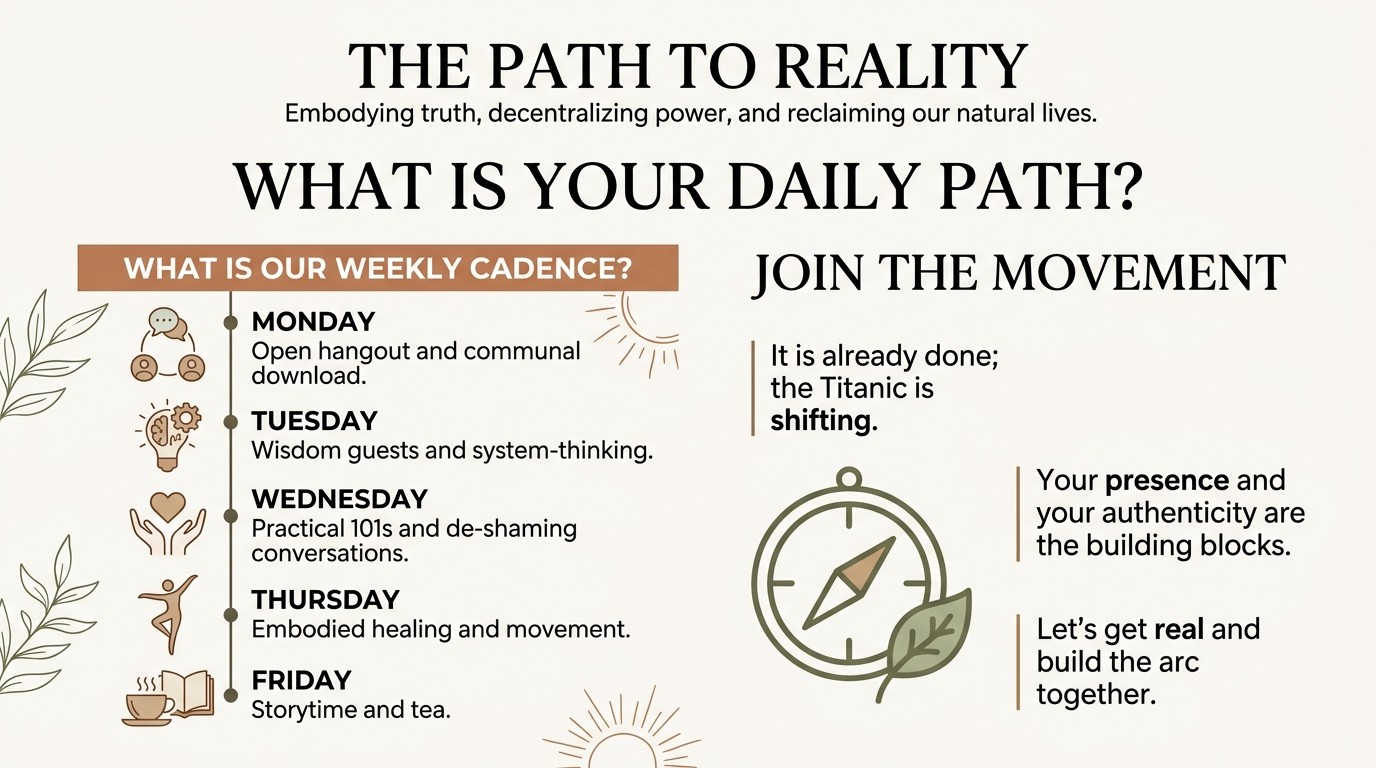
They express a commitment to open sharing devoid of paywalls or gatekeeping, emphasizing accessibility and collective healing.
The use of humor, personal anecdotes, and candid reflections on spiritual teachers and societal structures deepen the authenticity of the message.
The latter part of the transcript focuses on practical community-building ideas, the role of men in protecting and serving the feminine, and the importance of dismantling misogyny.
J'ana shares their evolving views on plant medicine, meditation, and therapy, underscoring that these tools must serve embodiment and daily reality rather than perpetuate escapism or specialness.
They conclude with a hopeful call to embrace authenticity as the highest frequency and to co-create a liberated, embodied, and joyful future together.
NHRH Chapter 1 An Introduction -
Heal Through the Body

Highlights
- 🌟 Lifelong quest for truth rooted in personal experience and deep trust in natural law.
- 🧠 Critique of traditional psychology and spirituality for neglecting the body and lived reality.
- 💫 Emphasis on embodiment as key to healing trauma and awakening beyond mental stories.
- 🌍 Vision of a new world based on natural law, communal sharing, and feminine leadership.
- 🔥 Radical honesty about spiritual teachers, societal systems, and personal betrayals.
- 🤝 Commitment to free, accessible knowledge and healing without paywalls or gatekeepers.
- 💪 Discussion on men’s role in protecting women and dismantling systemic misogyny for true liberation.
Key Insights
- 🌱 Embodiment as the Core of Healing: J'ana insists that true healing transcends intellectual or spiritual recognition of oneness and requires visceral engagement with the body. Trauma and conditioning are stored physically, and only through movement, attention, and embodiment can these deep wounds be released. This insight challenges the prevailing mind-centric models in therapy and spirituality, urging a holistic approach that honors the body as a living brain and energetic system.
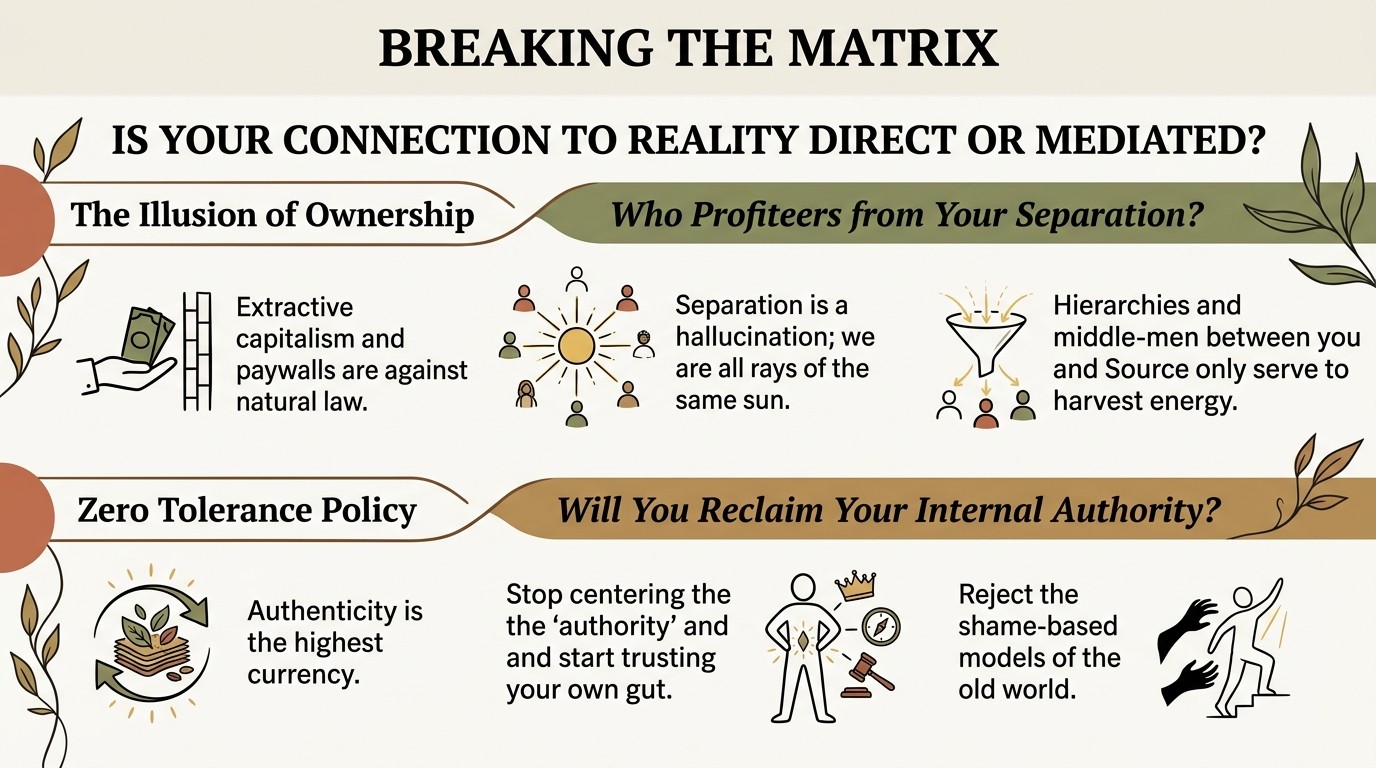
- 🧩 Deconstruction of the Separate Self: A foundational theme is the dismantling of the egoic notion of a separate self, which perpetuates suffering and disconnection. The speaker highlights that this separate self is a story—a shared conditioning—that is not true. Healing involves waking up from this illusion and realizing that “what’s looking is what you’re looking for,” meaning the observer and the observed are one. This non-dual realization is critical for mental freedom and authenticity.
- 🌀 Critique of Authority and Middlemen: J'ana expresses deep skepticism toward spiritual authorities, gurus, and therapists who position themselves as intermediaries between individuals and truth or enlightenment. They advocate for decentralized healing and collective witnessing, where each person verifies their own experience rather than deferring to external “experts.” This promotes empowerment and reduces dependency on hierarchical control.
- 💰 Rejection of Paywalls in Healing and Knowledge: J'ana challenges the monetization of healing, spirituality, and education, viewing paywalls as artificial barriers that perpetuate separation and exclusivity. They envision a commons—both digital and physical—where resources, knowledge, and tools are shared freely to support natural healing and fulfillment for all. This aligns with broader anti-capitalist and liberationist ideals.
- 🔥 Intersection of Social Systems with Spiritual Disembodiment: The discussion connects personal healing with systemic issues such as capitalism, patriarchy, and colonization, which enforce disembodiment and separation at a societal level. The speaker critiques the patriarchy’s inversion of natural law, where masculine dominance suppresses the feminine, and calls for a shift toward feminine-led systems that honor protection, creativity, and natural harmony.
- 🌿 Balanced View on Plant Medicine and Spiritual Practices: While acknowledging the opening potential of plant medicine and meditation, J'ana insists their ritualization into special, exclusive practices that can become traps of escapism or reinforce separation. They emphasize the importance of integrating these tools into everyday embodied life rather than using them as ends in themselves.
- 🤝 Role of Men in Supporting Feminine Leadership: J'ana stresses that real transformation requires men to awaken and commit to protecting and serving women and children, thereby realigning society with natural law. This involves dismantling misogyny and establishing new models of leadership rooted in service rather than dominance. J'ana's own experiences and observations give this insight practical and hopeful grounding.
NHRH Chapter 1 An Introduction - The Commonwealth
Detailed Analysis of NHRH Chapter 1 An Introduction
J'ana's narrative weaves together personal vulnerability and broad cultural critique, making their message both accessible and profound. Beginning with a touching childhood story about manifesting a dog through prayer, they establish a theme of trust in a benevolent natural order, which contrasts sharply with their later experiences in institutional psychology and spirituality. Their journey reflects a common human search for meaning and truth but is distinguished by a refusal to settle for intellectual abstraction or dogma.
The emphasis on embodiment is particularly significant. J'ana points out that Western psychology and many spiritual traditions have historically neglected the body, focusing instead on mental frameworks or transcendental states that don’t resolve trauma or fulfill the whole human experience. By citing William James’ sequence—feeling, thought, then emotion—they underline the primacy of somatic experience and the failure of mind-first approaches to address root causes of suffering.
Their adoption of Byron Katie’s inquiry method symbolizes a turning point: questioning the truth of one’s thoughts dismantles the egoic narratives but still leaves the body’s pain unaddressed.
Therefore, J'ana embraces embodiment teachers like Judith Blackstone to integrate awareness with bodily healing, creating a full-spectrum approach to awakening.
This integration challenges the prevalent spiritual culture J'ana terms “anti-spiritualist,” not in opposition to spirit but as a critique of spiritual practices that ignore practical embodiment and social realities.
The critique extends to capitalist and patriarchal systems, which J'ana links to the global crisis of disconnection and suffering. They envision healing as both personal and political, requiring new social structures that reflect natural law and communal sharing.
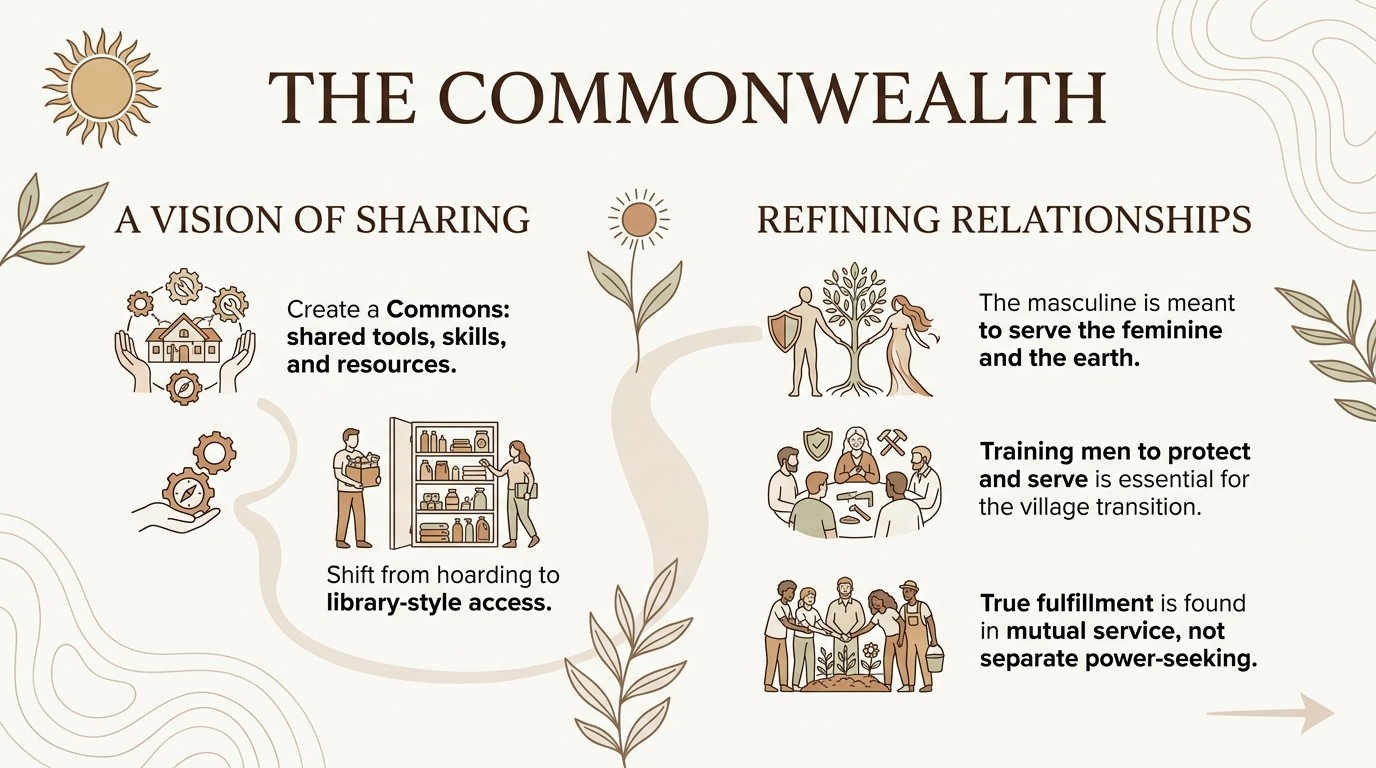
The vision of a commons—digital and physical—is a concrete articulation of this new paradigm. By offering free access to knowledge and shared resources, J'ana models the dismantling of scarcity mentalities and hierarchical control.
The idea resonates with indigenous traditions and modern liberationist movements, emphasizing interdependence and mutual aid over ownership and competition.
J'ana's reflections on men’s role and misogyny reveal a nuanced understanding of gender dynamics and power.
Rather than demonizing men, they call for men to awaken to their authentic role as protectors and servants of the feminine, which they assert is the source of life and natural authority.
This rebalancing is crucial for creating safe, flourishing communities and aligns with the speaker’s broader theme of returning to natural law.
Finally, J'ana's candidness about betrayals, spiritual teachers, and their own limitations adds depth and credibility.
They model a practice of continuous inquiry, self-trust, and humor, inviting their audience to join in a collective journey toward freedom, fulfillment, and authenticity.
In sum, the transcript is a rich tapestry of personal memoir, spiritual philosophy, psychological insight, social critique, and visionary community-building.
It calls for awakening beyond stories and structures that imprison us to a life of embodied truth, shared healing, and liberated co-creation.