Break In The Glass Summary
Breaking the Glass: A Psychological, Sociological, and Cultural Reading of an Anthem of Self-Liberation
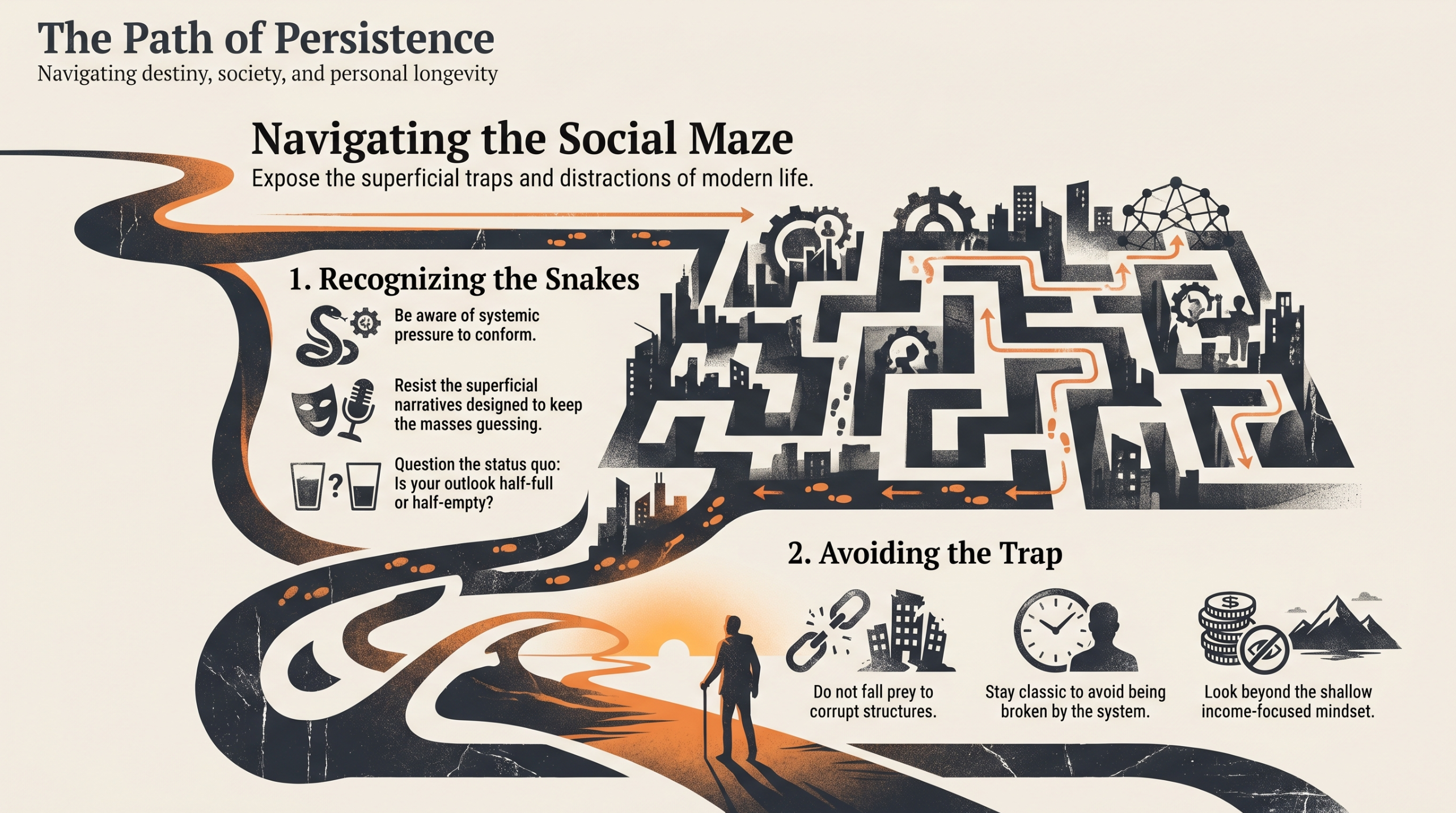
Introduction to Break In The Glass Summary
"Break in the Glass" is more than a hip-hop track; it is a compact wisdom text.
Within its compressed verses, the song stages a confrontation between an inherited social order and an emerging self, asking listeners to recognize where they have been confined, what they have inherited, and what within them still wants to live.
Read carefully, the lyrics encode insights that align with decades of research in trauma psychology, self-determination theory, critical sociology, and hip-hop cultural studies.
This paper treats the song as a cultural artifact that does what the best spoken-word art has always done: it diagnoses pain and prescribes movement (Rose, 1994; Chang, 2005).
Using frameworks from the Luminary Path tradition—polyvagal theory, Internal Family Systems (IFS), shadow work, somatic approaches, and Emotional Freedom Techniques (EFT)—alongside foundational scholarship in psychology and sociology, this analysis reads "Break in the Glass" as a roadmap for personal and collective transformation.
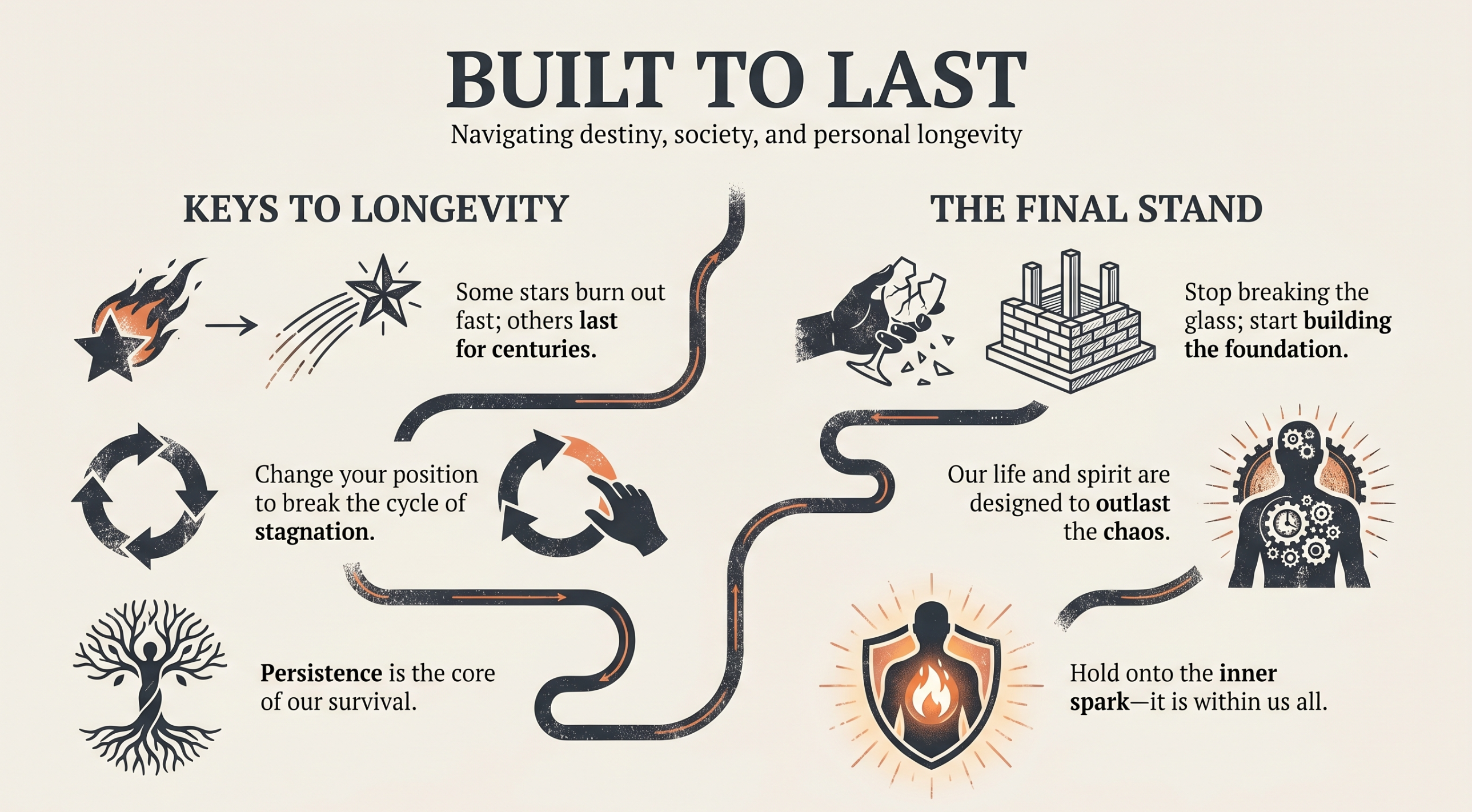
Destiny, Autonomy, and the Architecture of the Self
The song's opening insistence on personal destiny and self-determination is not naïve individualism; it is a clinical and philosophical claim about what makes human beings well.
Deci and Ryan's (2000) self-determination theory establishes autonomy, competence, and relatedness as the three psychological nutrients without which flourishing is impossible.
When the lyrics push back against being defined from the outside, they articulate what Ryan and Deci (2000) describe as three "innate psychological needs—competence, autonomy, and relatedness—which when satisfied yield enhanced self-motivation and mental health and when thwarted lead to diminished motivation and well-being" (p. 68).
To claim one's destiny, in this framework, is not arrogance; it is health. APAPubMed
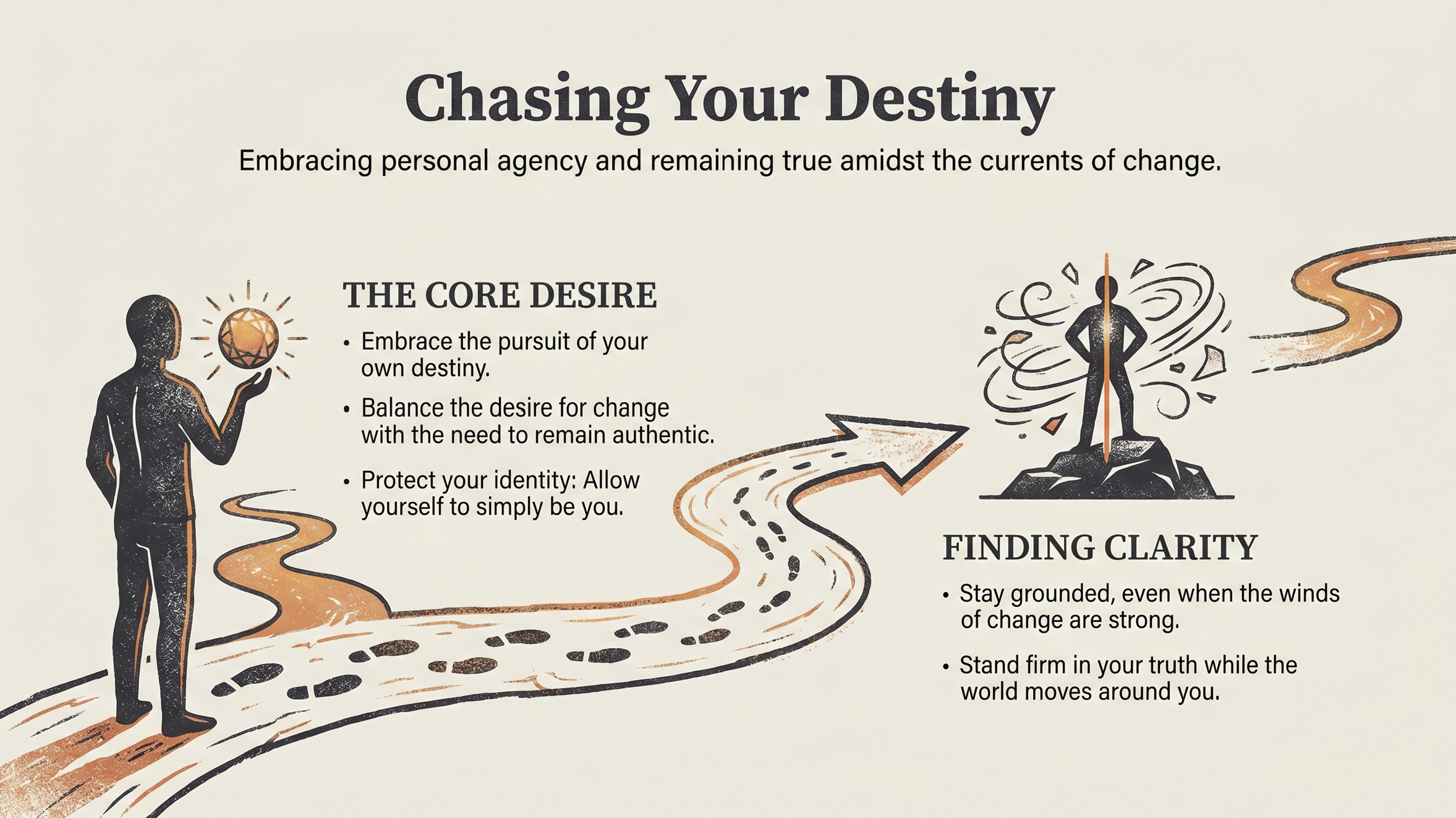
The song's emphasis on inner authority also resonates with Erikson's (1968) developmental psychology, in which identity is forged through an active "crisis"—a confrontation between received roles and authentic self.
Erikson understood that identity "is located both in the core of the individual and in the core of the communal culture," meaning that the artist's autobiographical assertions are simultaneously a private and a political act.
Foucault (1977/1995) sharpens this further: the modern subject is not simply free; the subject is produced through disciplinary practices that make us "the principle of [our] own subjection" (p. 203).
To "break the glass" is to interrupt the internalized gaze—the panoptic eye that keeps us small. Taylor & Francis OnlineGoodreads
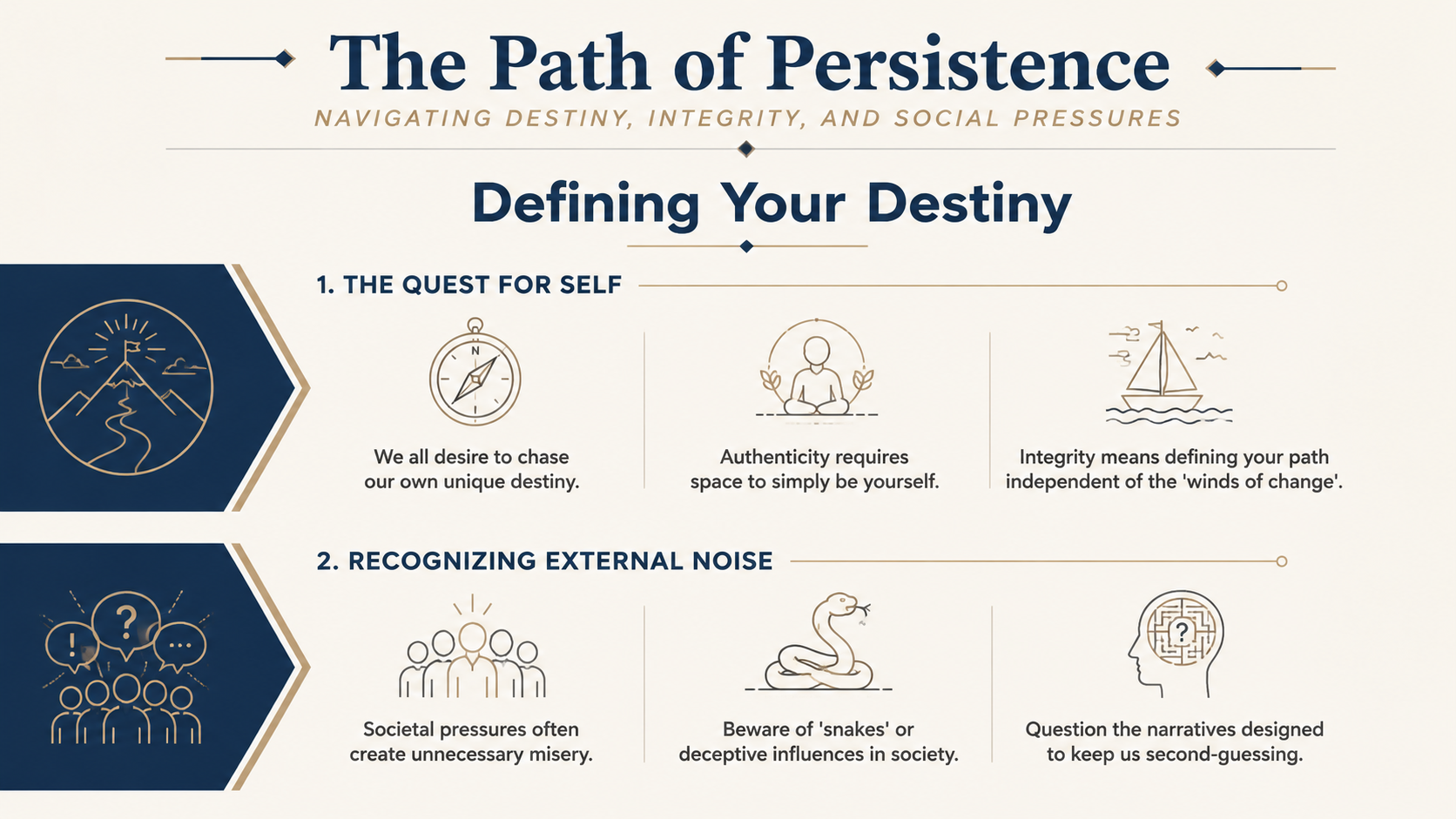
Systemic Pressure and the Politics of Resistance
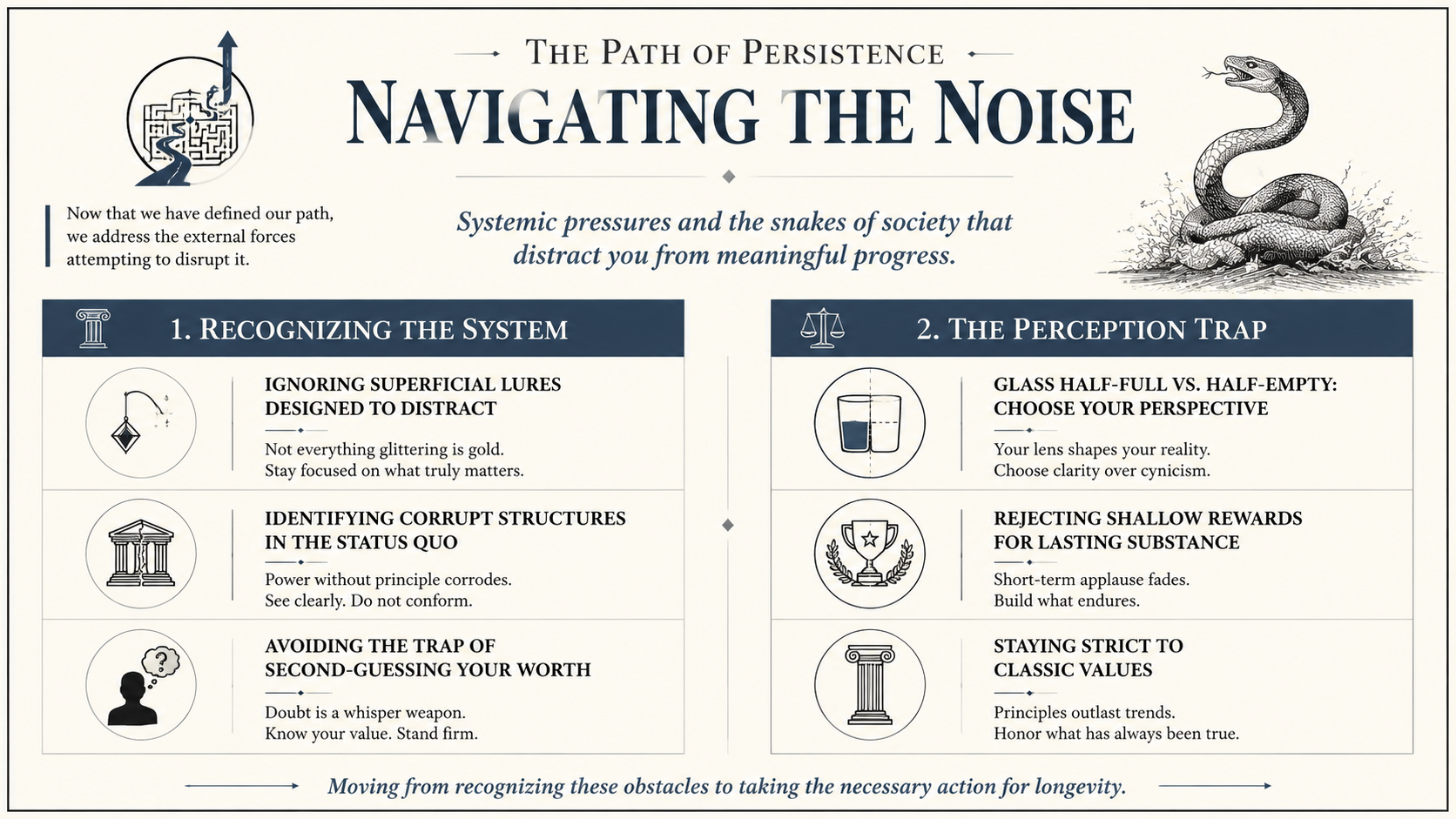
The song's second movement names what hems the speaker in: corruption, pressure, surveillance, expectation.
Hip-hop, since its origins in the postindustrial Bronx, has been an art of naming such forces.
Rose (1994) argues that rap gives sonic shape to the lives of those that mainstream institutions render invisible, fusing "African-based oral traditions" with cutting-edge music technologies to create a uniquely resistant cultural form.
Chang (2005) traces how hip-hop emerged from what he calls "the politics of abandonment," a generational response to deindustrialization, neglect, and racialized policing.
Dyson (2007) frames the genre itself as serious intellectual work—art produced by youth whose conditions of "systemic neglect and disenfranchisement" (Rose, 1994, as discussed in Chang, 2005) made cultural innovation a survival strategy. Wesleyan University PressTricia Rose
Bourdieu's (1986) theory of cultural capital explains why this naming is necessary. Dominant institutions reward "embodied" cultural capital—accents, postures, tastes, "long-lasting dispositions of the mind and body" (Bourdieu, 1986, p. 243)—that mirror the elite, while devaluing the embodied knowledge of the marginalized.
Freire (1970/2000) calls the resulting condition internalized oppression—a state in which "the oppressed, having internalized the image of the oppressor and adopted his guidelines, are fearful of freedom" (p. 47).
Hooks (1994) describes the antidote as "education as the practice of freedom" (p. 12), a transgressive pedagogy in which truth-telling itself becomes liberatory.
The track's refusal to perform palatability is, in this sense, both psychological and political work. Marxists Internet Archive + 2
Resilience, Endurance, and the Long Arc of Recovery
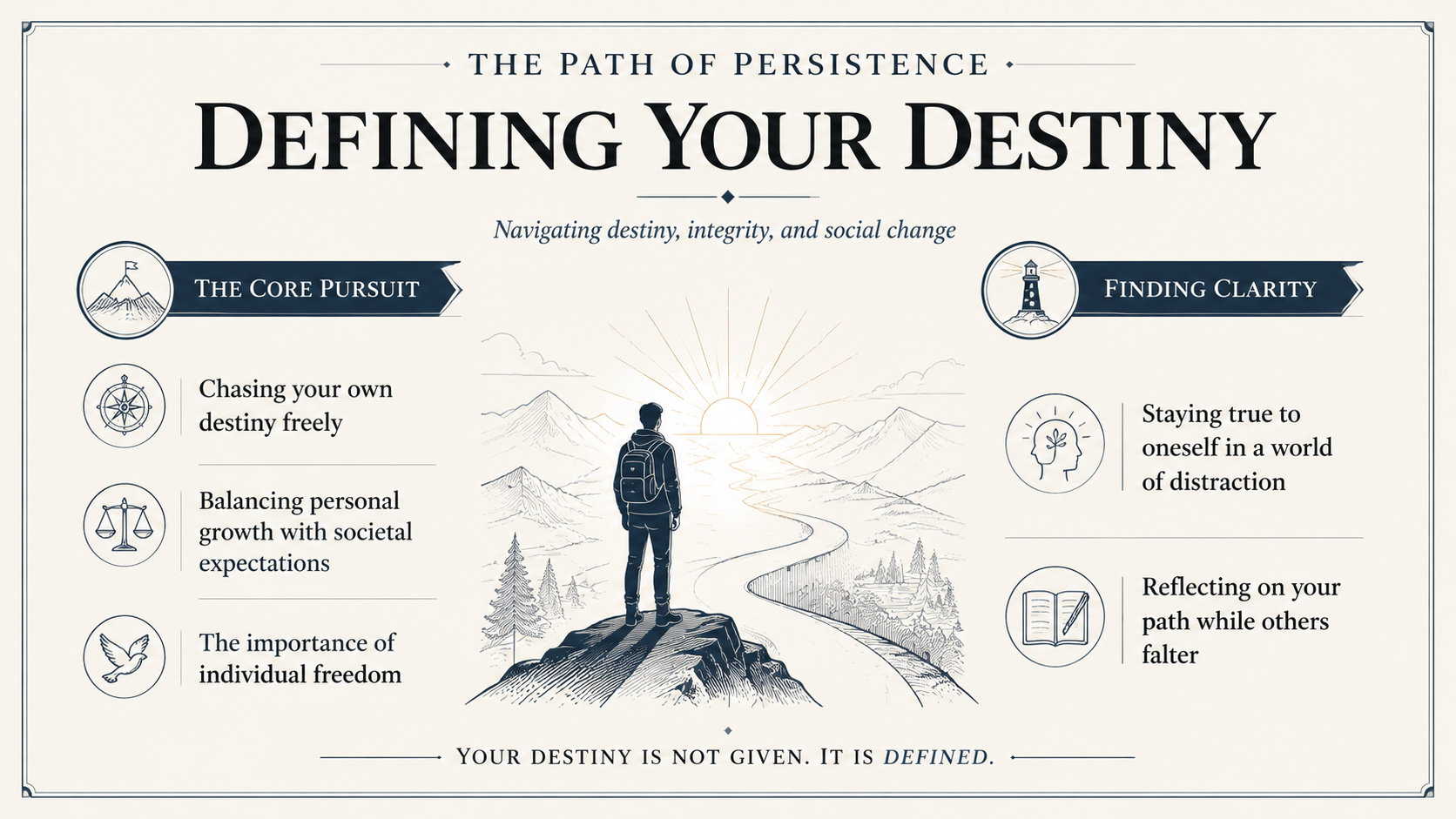
When the speaker insists on lasting "a century" rather than burning out from fast entry, the song articulates a sophisticated theory of resilience.
Seligman's (1975) work on learned helplessness demonstrated that humans and animals exposed to uncontrollable adversity often stop trying, even when escape becomes possible.
The cure is not toughness but the relearning of agency.
Baratta, Seligman, and Maier (2023) have revised the original theory neurobiologically: prolonged exposure to aversive stimulation produces debilitation through activation of serotonergic neurons in the dorsal raphe nucleus, and this debilitation "is prevented with an instrumental controlling response, which activates prefrontal circuitry detecting control and subsequently blunts the dorsal raphe nucleus response."
In other words, debilitation is the neurological default; controllability must be actively learned via the medial prefrontal cortex—a finding that reframes resilience not as inborn grit but as a practiced capacity. nih + 2
Endurance, in the song, is not stoic suppression; it is the slow rebuilding of safety. Herman (1992) articulates this in her landmark formulation:
"Recovery unfolds in three stages.
The central task of the first stage is the establishment of safety.
The central task of the second stage is remembrance and mourning.
The central task of the third stage is reconnection with ordinary life" (p. 155).
Van der Kolk (2014) and Levine (1997) extend this somatically, arguing that endurance without embodied integration becomes chronic dysregulation.
Porges's (2011) polyvagal theory provides the neurobiology: lasting resilience depends on a flexible autonomic nervous system that can move fluidly between mobilization (sympathetic activation) and social engagement (ventral vagal regulation).
The lyric's promise of longevity is therefore not bravado; it is, in effect, a description of a well-regulated nervous system. Complextrauma
The Break in the Glass: Disruption as Transformation
The central metaphor—the break in the glass—is the song's most psychologically loaded image.
In trauma theory, the moment of rupture is not the end of the story but often its hinge.
Tedeschi and Calhoun (2004) define posttraumatic growth as "the experience of positive change that occurs as a result of the struggle with highly challenging life crises," manifesting in "an increased appreciation for life in general, more meaningful interpersonal relationships, an increased sense of personal strength, changed priorities, and a richer existential and spiritual life" (p. 1).
Growth, in their model, is not in spite of the break; it is through it. Taylor & Francis Online
Schwartz and Sweezy's (2021) Internal Family Systems model suggests that what we call a "breakthrough" is often the moment a long-exiled inner part—a protector, an exile, a younger self—is finally heard and integrated under the leadership of the core Self.
Jung's earlier work on shadow integration described the same dynamic in mythic language: the meeting with oneself begins as a meeting with one's own shadow, the rejected material that, when reclaimed, becomes "firm and fertile ground" for an authentic life.
Pennebaker, Kiecolt-Glaser, and Glaser (1988) provided some of the first experimental evidence that putting such ruptures into language is itself physiologically healing: in their study, participants who wrote about traumas showed enhanced T-lymphocyte response to immunological challenge, a systolic blood pressure decline of −5.5 mmHg (compared to +8.7 mmHg for low-disclosers), and approximately 50% fewer health-center visits in the months following the four-day writing exercise.
The track itself, in being made, performs the very healing it describes—a phenomenon documented in hip-hop therapy research (Travis, 2013; Tyson, 2002). ResearchGateResearchGate
Somatic and energy-psychology modalities offer concrete tools for navigating such moments.
Clinical EFT has now accumulated a substantial evidence base: Church, Stapleton, Vasudevan, and O'Keefe's (2022) systematic review identified 56 randomized controlled trials of Clinical EFT, and an updated meta-analysis the following year reported that "treatment with Clinical EFT, when compared to wait list, usual care, or no treatment controls, resulted in significant and large effect sizes, ranging from 1.38 to 2.51" for PTSD symptom reduction.
Narrative therapy similarly invites clients to externalize: White and Epston (1990) argue that externalizing "encourages persons to objectify and, at times, to personify the problems that they experience as oppressive" (p. 38), so that, as the narrative-therapy tradition teaches, the person is not the problem; the problem is the problem.
The "glass" in the song functions exactly this way—not as the self, but as the construction that contained the self. Frontiers + 3
Authenticity, "Keep It Classic," and the Refusal of the Counterfeit
The lyric's commitment to "keep it classic" is a refusal of the counterfeit.
Brown (2012) frames authenticity as a daily practice of dropping the armor we use to manage others' perceptions and instead letting ourselves be seen, arguing that "vulnerability is the birthplace of love, belonging, joy, courage, empathy, and creativity" (Brown, 2012).
In a cultural economy that, as Bourdieu (1986) showed, rewards mimicry of dominant dispositions, choosing the authentic is both a psychological and a sociopolitical act.
Hooks (1994) and Freire (1970/2000) both link authenticity to liberation: only the un-counterfeited voice can dialogue with another's.
To "keep it classic" is to resist the algorithmic pressure toward novelty-as-performance and to honor what Erikson (1968) called continuity of self across time. Goodreads
Minor Themes: Optimism, Longevity, Collectivity, and Relational Identity
The song's play with glass-half-full and glass-half-empty engages directly with later work in the learned-helplessness tradition: explanatory style—the stories we tell about why things happen—shapes whether we recover or collapse (Baratta et al., 2023).
J'ana used to tell me, "Dave, you're caught in a story."
See also the summary on Ep 043 We Are Under Spells.
What do you tell yourself about what you've been through? And how does that shape how you feel about your past experiences? And how does that impact your life's arc or trajectory? Does it limit you and your thriving or does it expand your possibilities and potential?
The lyric reframes pessimism as not a personality trait but a habit of attribution that can be revised.
The "burn out from fast entry" versus "last a century" contrast maps onto Deci and Ryan's (2000) distinction between extrinsic and intrinsic motivation: extrinsically driven striving exhausts; intrinsically aligned action endures.
The line "it's in us" articulates what Freire (1970/2000) called collective conscientization—the recognition that liberation is never solo.
Fancourt et al. (2016) demonstrated this empirically in a randomized trial of group drumming in community mental-health settings: by week 10, participants' social resilience scores rose by 10.59 points (SE = 1.78, 95% CI [6.94, 14.24]), depression scores fell by −3.41 points (SE = 0.62, 95% CI [−4.68, −2.15]), and the anti-inflammatory cytokine IL-4 significantly increased (F₂,₃₄ = 3.83, p < .05).
Communal sound, in other words, regulates communal bodies; "it's in us" is more than rhetoric.
Travis (2013) similarly documents how rap music supports five empowerment domains—
esteem, resilience, growth, community, and change—
in young listeners. PLOS + 2
Finally, the song's attention to individuality within relationship reflects the IFS principle that healthy relationships require self-led parts, not fused or merged identities (Schwartz & Sweezy, 2021).
To love without losing oneself is itself a form of breaking the glass.
Conclusion: The Glass Was Never You
Read as a whole, listened to from beginning to end, "Break in the Glass" is a lyrical and musical manual for liberation that quietly maps onto a remarkable convergence of contemporary research.
It tells listeners that the cage is real but not final;
that endurance is a nervous-system skill, not a moral virtue;
that breakthrough is a developmental milestone,
not a catastrophe;
and that authenticity, far from being a luxury,
is the precondition of belonging.
For those experiencing the personal transformation, the practical invitation is direct:
locate the glass (the inherited story, the panoptic gaze, the exiled part),
name it with the precision the song models,
and trust that what wants to emerge is, in Herman's (1992) phrase,
"reconnection with ordinary life" (p. 155)—
but ordinary life now lived from the inside out.
The break is not the end of the song.
It is the chorus.
It is the hinge between your past and your future.
References
Baratta, M. V., Seligman, M. E. P., & Maier, S. F. (2023). From helplessness to controllability: Toward a neuroscience of resilience. Frontiers in Psychiatry, 14, 1170417. https://doi.org/10.3389/fpsyt.2023.1170417
Bourdieu, P. (1986). The forms of capital. In J. G. Richardson (Ed.), Handbook of theory and research for the sociology of education (pp. 241–258). Greenwood Press.
Brown, B. (2012). Daring greatly: How the courage to be vulnerable transforms the way we live, love, parent, and lead. Gotham Books.
Chang, J. (2005). Can't stop won't stop: A history of the hip-hop generation. St. Martin's Press.
Church, D., Stapleton, P., Vasudevan, A., & O'Keefe, T. (2022). Clinical EFT as an evidence-based practice for the treatment of psychological and physiological conditions: A systematic review. Frontiers in Psychology, 13, 951451. https://doi.org/10.3389/fpsyg.2022.951451
Deci, E. L., & Ryan, R. M. (2000). The "what" and "why" of goal pursuits: Human needs and the self-determination of behavior. Psychological Inquiry, 11(4), 227–268. https://doi.org/10.1207/S15327965PLI1104_01
Dyson, M. E. (2007). Know what I mean? Reflections on hip-hop. Basic Civitas Books.
Erikson, E. H. (1968). Identity: Youth and crisis. W. W. Norton.
Fancourt, D., Perkins, R., Ascenso, S., Carvalho, L. A., Steptoe, A., & Williamon, A. (2016). Effects of group drumming interventions on anxiety, depression, social resilience and inflammatory immune response among mental health service users. PLoS ONE, 11(3), e0151136. https://doi.org/10.1371/journal.pone.0151136
Foucault, M. (1995). Discipline and punish: The birth of the prison (A. Sheridan, Trans.). Vintage Books. (Original work published 1977)
Freire, P. (2000). Pedagogy of the oppressed (M. B. Ramos, Trans.; 30th anniversary ed.). Continuum. (Original work published 1970)
Herman, J. L. (1992). Trauma and recovery: The aftermath of violence—from domestic abuse to political terror. Basic Books.
hooks, b. (1994). Teaching to transgress: Education as the practice of freedom. Routledge.
Levine, P. A. (1997). Waking the tiger: Healing trauma. North Atlantic Books.
Pennebaker, J. W., Kiecolt-Glaser, J. K., & Glaser, R. (1988). Disclosure of traumas and immune function: Health implications for psychotherapy. Journal of Consulting and Clinical Psychology, 56(2), 239–245. https://doi.org/10.1037/0022-006X.56.2.239
Porges, S. W. (2011). The polyvagal theory: Neurophysiological foundations of emotions, attachment, communication, and self-regulation. W. W. Norton.
Rose, T. (1994). Black noise: Rap music and Black culture in contemporary America. Wesleyan University Press.
Ryan, R. M., & Deci, E. L. (2000). Self-determination theory and the facilitation of intrinsic motivation, social development, and well-being. American Psychologist, 55(1), 68–78. https://doi.org/10.1037/0003-066X.55.1.68
Schwartz, R. C., & Sweezy, M. (2021). Internal family systems therapy (2nd ed.). Guilford Press.
Seligman, M. E. P. (1975). Helplessness: On depression, development, and death. W. H. Freeman.
Tedeschi, R. G., & Calhoun, L. G. (2004). Posttraumatic growth: Conceptual foundations and empirical evidence. Psychological Inquiry, 15(1), 1–18. https://doi.org/10.1207/s15327965pli1501_01
Travis, R. (2013). Rap music and the empowerment of today's youth: Evidence in everyday music listening, music therapy, and commercial rap music. Child and Adolescent Social Work Journal, 30(2), 139–167. https://doi.org/10.1007/s10560-012-0285-x Springer
Tyson, E. H. (2002). Hip hop therapy: An exploratory study of a rap music intervention with at-risk and delinquent youth. Journal of Poetry Therapy, 15(3), 131–144. https://doi.org/10.1023/A:1019795911358 Springer
van der Kolk, B. A. (2014). The body keeps the score: Brain, mind, and body in the healing of trauma. Viking.
White, M., & Epston, D. (1990). Narrative means to therapeutic ends. W. W. Norton.